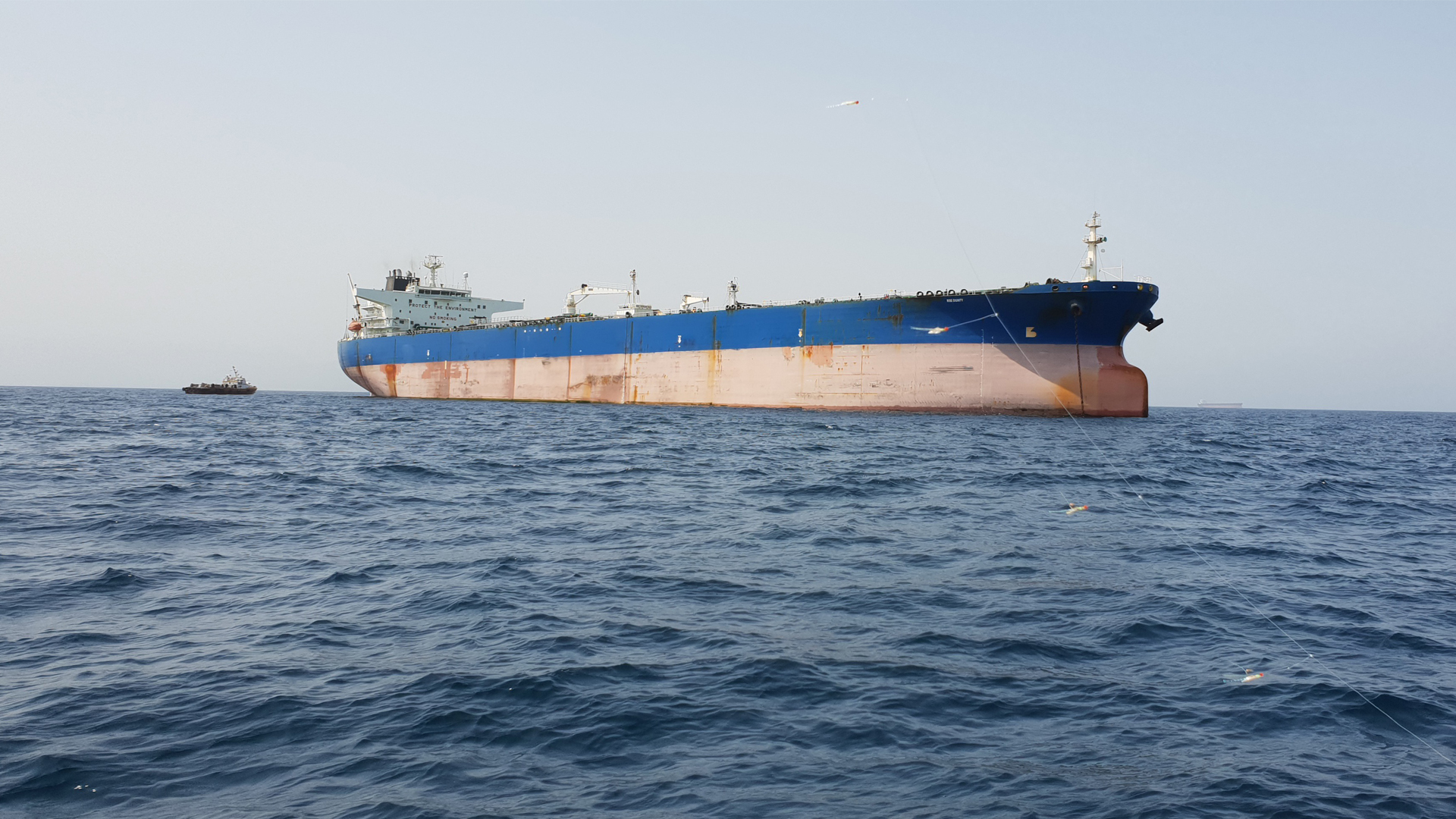
The seven-day moving average stayed above 26 vessels during the period, while in October it was below 25 on at least two-thirds of days. The counts may omit ships that crossed or tried to cross the strait because of signal interference and vessels switching off their transponders, Bloomberg reported Thursday.
Vortexa data also show a slight decline in very large crude carriers (VLCCs) and Suezmaxes using the chokepoint, offset by an increase in smaller Aframax tankers. That shift makes it harder for analysts to estimate how much crude and fuel is leaving the Persian Gulf for international markets.
Aframaxes carried more crude out of the strait in October than in any month since the war began, as Iran targeted supertankers and incidents involving naval mines and unidentified projectiles reached a wartime high. At the same time, a record number of long-range-2 (LR2) tankers, typically used to carry clean fuels such as diesel and gasoline, have switched to transporting crude.
LR2 tankers have capacity similar to Aframaxes, which can carry up to 800,000 barrels of crude. A converted LR2 may be used in the complex trading arrangements near Hormuz, where shuttle shipments have become the prevailing way to move crude out of the Persian Gulf in recent months.



Comments (0)
No comments yet. Be the first!