Researchers can access MatterSeek through an international website and desktop client. The rollout also includes Hugging Face, LinkedIn, Facebook and X. A free beta is available online in China, where users can try the platform’s forward- and reverse-design models.
MatterSeek is a non-language physics foundation model developed in-house. In forward design, users enter a composition to receive predictions spanning composition, structure, processing and performance. In reverse design, they set performance targets and the system proposes a material’s composition, crystal structure, processing route and expected performance. Its engine can optimize 190 metrics, selecting objectives and constraints from a broader industrial framework of nearly 200 metrics covering areas such as service performance, manufacturability, interfacial properties and weatherability.
The platform also provides a proposed synthesis route, required equipment, operating steps and an estimated raw-material cost. Yuyao says high-value candidates can be checked with density functional theory, phase-field and finite-element simulations. The system draws on structured datasets and several hundred thousand experimental records, including data from experiments conducted to address identified research gaps.
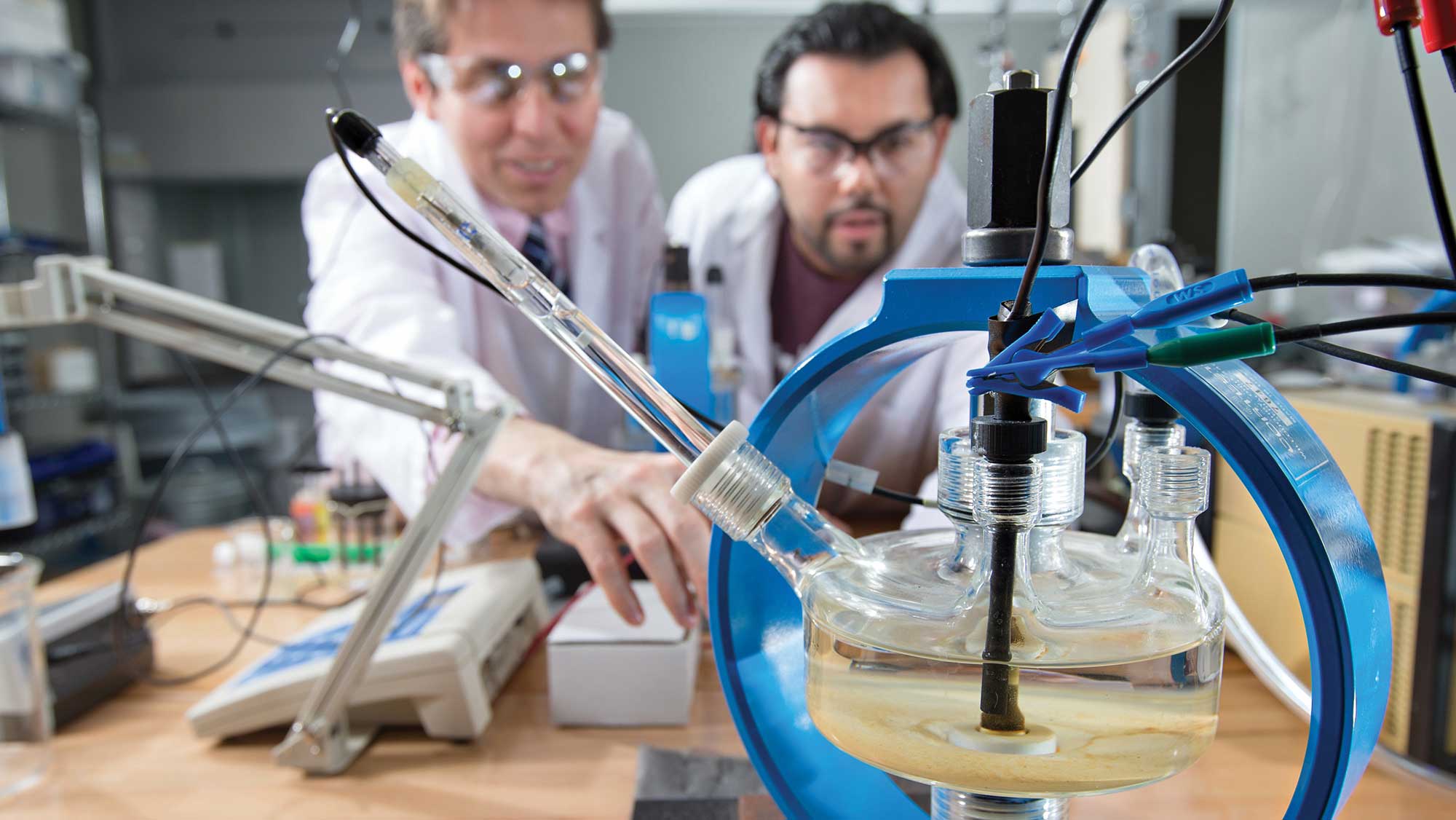
Yuyao’s automated laboratory runs model-driven experiments around the clock. After synthesis, samples undergo XRD phase characterization and SEM/EDS analysis of morphology and composition. Measurements are compared with predictions and fed back into model retraining. The company says MatterSeek is already used in embodied-intelligence robotics, semiconductors, new energy and biodegradable materials, serving dozens of industrial customers and completing more than 100 R&D assignments.
Enterprise customers can choose private deployment and data residency options; Yuyao says customers retain control of intellectual property in sensitive formulations. The company describes the platform as a route from industrial requirements to verified material candidates and manufacturing-ready processes, rather than a tool that returns only a predicted structure.



Comments (0)
No comments yet. Be the first!